


Coordinating long-running processes on prime of distributed techniques is likely one of the persistent laborious issues in software program. A course of that runs throughout many steps can’t rely on ending in a single clear move, because the machines operating it could crash, stall, or drop connections. To deal with this fragility, builders have typically resorted to writing layers of retries, timeouts, and checkpointing to maintain state alive throughout failures. Nevertheless, this practice plumbing is commonly brittle, laborious to take care of, and might break down at scale.
Temporal is an open-source platform constructed round an method it calls sturdy execution. Builders write a workflow as a simple sequence of steps, and the platform preserves its full state beneath, so the code can survive a crash and resume precisely the place it left off. The underlying know-how was created at Uber over a decade in the past. Since then, Temporal has change into foundational infrastructure for AI and agent workloads, the place long-running instruments and agent loops want precisely this type of sturdiness.
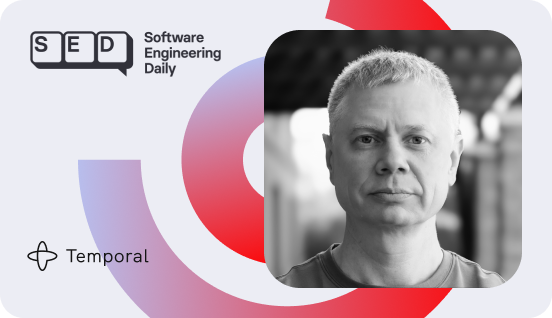
Maxim Fateev is a co-founder of Temporal. He returns to the present with Sean Falconer to debate how sturdy execution works, why it’s infrastructure fairly than a framework, the way it matches the non-deterministic world of AI brokers, its new capabilities, and why Temporal’s totally open supply technique is central to its moat.
Sponsorship inquiries:
[email protected]