


by Clare Boland, OFRF Communication Supervisor
About Genesis Gardens
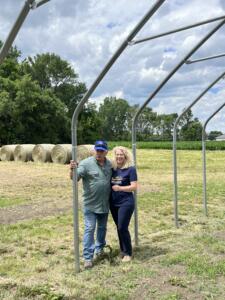
Glen Pulse, Genesis Gardens’ Operation Supervisor, and Dr. Angela Jackson-Pulse, SDSPA’s TOPP Natural Ag Transition Advisor.
In Vermillion, South Dakota, a dedicated group of volunteers is bringing an previous typical agriculture plot again to life. Genesis Gardens, a mission of Pulse of Life Church, is working to create a group farm and kitchen on the land adjoining to the church, proper outdoors Vermillion’s metropolis middle. The mission of the mission is to make use of native, natural meals manufacturing to nourish their group and create a significant connection to the land they steward.
Along with dedicated volunteers, Genesis Backyard is using USDA grants to make their dream a actuality. The primary part of the mission is rebuilding soil well being and establishing a group farm utilizing regenerative practices. Via the Pure Sources Conservation Service (NRCS) Conservation Apply Requirements 823 (Natural Administration), the farm receives cost-share funding to do common soil checks and create a soil administration plan based mostly on the outcomes. The second part is changing a shed on the property right into a business kitchen, which can provide meals for native colleges and the group. Via the Resilient Meals Techniques Infrastructure (RFSI) program, Genesis Gardens is making a kitchen for value-added processing of the produce they develop; the power may even be out there to native farmers within the space.
Farmer Glen Pulse, a co-owner of Prairieun Organics, serves because the backyard’s operations supervisor. This previous summer season, OFRF visited Genesis Gardens for a soil well being area day hosted by the South Dakota Specialty Producer’s Affiliation. On the occasion, Glen described his work constructing soil well being on the positioning, and native NRCS brokers guided attendees by the method of finishing soil checks, and shared how NRCS packages can profit small-scale, natural producers.
Beginning with the Soil
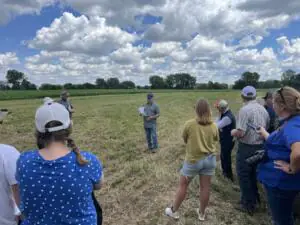
Glen explains Genesis Gardens’ soil well being practices to area day attendees.
The most important problem for Genesis Gardens was rebuilding soil well being. The land had been used to farm corn and soybeans conventionally for over 20 years, leaving the soil depleted. Glen and his spouse, Angela Jackson-Pulse, have farmed at Prairiesun Organics for the reason that 2010s, utilizing solely regenerative natural practices since 2019. Following the lead of their farm, Glen’s purpose at Genesis Gardens is to “use nature as nature meant, to rebuild issues.”
To assist rebuild, Glen first turned to his native NRCS workplace. There he was matched with Ryan Frickel, Clay County’s District Conservationist, who additionally attended the sphere day. Ryan labored with Glen to create a soil-testing and regenerative-practice plan for the farm underneath CPS 823 (Natural Administration).
“823 works as an umbrella time period,” Ryan defined. The usual facilitates cost-sharing and technical assist for transitioning and natural producers pursuing natural practices like decreased tillage or no-till, nutrient administration, soil testing, cowl crops, cropping rotations, creating area borders, and extra. “823 can deal with all that underneath one interim conservation observe.”
>>> About NRCS CPS 823 (Natural Administration): CPS 823 was an interim Conservation Apply Normal that NRCS provided by the Environmental High quality Incentives Program (EQIP) for transitioning and authorized natural farmers. NRCS discontinued it beginning in fiscal yr 2027. Present contracts might be carried by to completion, however no new CPS 823 contracts might be written.
The sector day additionally gave attendees a hands-on take a look at why soil well being issues. NRCS employees zeroed in on how regenerative soil well being practices will help farmers and gardeners, utilizing a rainfall simulator to indicate how shortly water infiltrated by 5 completely different soil plates: rotationally grazed, constantly grazed, cowl crop, no-till, and standard tillage. The no-till, rotationally grazed, and canopy crop plates absorbed considerably extra water, whereas typical tillage had essentially the most runoff. “The message is,” an NRCS agent shared, “it’s necessary to maintain your soil coated.”
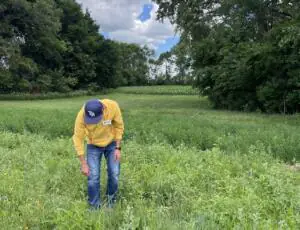
Ryan Frickel in Genesis Gardens’ pollinator habitat.
Later within the day, Ryan confirmed area day attendees tips on how to measure water infiltration charge on their very own land utilizing a hoop cylinder take a look at.
Genesis Gardens’ three-year natural transition plan is rooted in listening to the soil. “[The land] is therapeutic itself,” Angela stated. “We let the soil checks and the soil evaluation information what we do on the land.” Yr one began with a baseline Haney soil take a look at, then a minimal tillage occasion to determine a canopy crop, after which they let the land relaxation.
“You’ve been by a tough 30 years,” Angela stated of the land, “I believe you want a break.”
Via analyzing soil outcomes and dealing with Ryan, Glen and Angela have been capable of tailor their cowl crop mixes to the wants of the land. The place the land borders a traditional agricultural operation, they deliberate an herbicide-resistant cowl crop seed. The place the land borders the highway, they planted a salt-tolerant combine. Additionally they planted a monarch combine to determine a pollinator habitat.
Once we visited Genesis Gardens, it was in yr two of the plan. The soil take a look at on the finish of the primary yr confirmed improved soil well being, however that the land wanted slightly extra time to relaxation in cowl crop earlier than transferring into manufacturing. The crops within the pollinator habitat have been simply beginning to present flowers and produce useful pollinators again to the land.
Working with NRCS
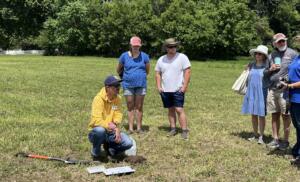
Ryan demonstrates a hoop cylinder take a look at.
To others seeking to create a mission like this, Glen stated their first cease must be their native NRCS workplace. “It was so simple as giving our native NRCS agent a name, asking him just a few questions, and that lit the spark.” If the native workplace doesn’t have the experience wanted, he encourages farmers to name round till they discover an workplace that does.
Getting began with NRCS “generally is a little bit of a course of,” Ryan shared. It’ll take a short time for a brand new farm to get within the system and enrolled in a program. Ryan inspired farmers to do a little bit of analysis into what natural practices they’re concerned about and the way they contribute to the wants of their land. “You do at all times should have a useful resource concern to justify the practices you wish to use.”
Rising Good, Floor Up
The mission for Genesis Gardens mirrors the journey of its soil. “We’re taking one thing that’s depleted and turning it into one thing that’s giving life, in a wholesome means,” Glen stated.
Later that summer season, Genesis Gardens established their first beds for vegetable crops. After making ready the preliminary beds, they purpose to be as near no-till as attainable, using methods like creating mulch borders and weeding by hand.
Along with rebuilding the soil, Genesis Gardens additionally plans to construct group by connecting individuals to the place their meals comes from. This features a youngsters’ backyard training program, an “undertake a row program,” and free or reduced-price CSA shares for low-income households.
Glen is hopeful that this mission can function “native analysis for what might be finished with depleted soil” and encourage individuals to deliver natural agriculture into their communities.